Visiting Red Rocks Amphitheatre: The Complete Concert Guide
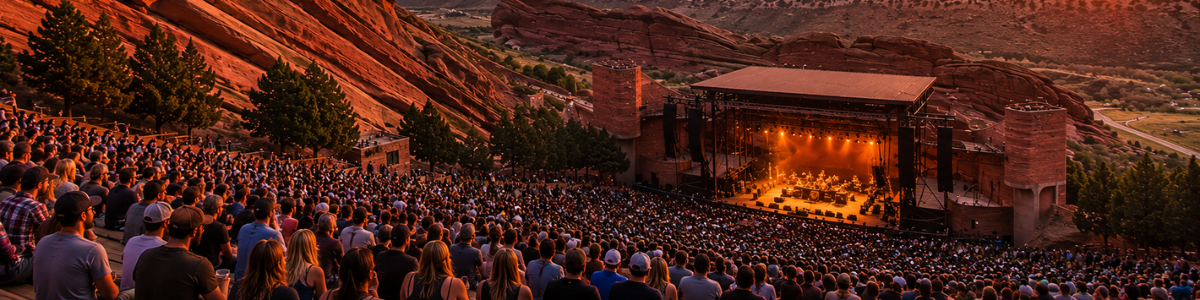
There’s a bend in the road about a mile into the park. You’ve been following GPS directions off I-70, winding up through Morrison, Colorado, wondering if you took a wrong turn somewhere. Then you round that curve, and the rocks appear: two massive sandstone monoliths rising 300 feet on either side of a natural bowl cut into the foothills of the Rocky Mountains. Most people slow down involuntarily. Some stop entirely. Visiting Red Rocks Amphitheatre for the first time, that moment hits differently than anything you could have anticipated from a photo or a friend’s description.
That moment is part of the show. And it happens before you’ve even parked.
Red Rocks Amphitheatre isn’t simply a concert venue. It’s a National Historic Landmark that has hosted everyone from The Beatles to Beethoven, carved by geological forces that took millions of years to complete what no architect could have designed. Artists routinely describe playing here as a career milestone. Fans who’ve attended shows across the country will tell you Red Rocks is different in a way that’s genuinely hard to articulate until you’re standing in it.
This guide is written for the first-timer: someone who has heard about Red Rocks their whole life and is finally about to find out what the fuss is about. By the time you’ve finished reading, you’ll walk in feeling like someone who’s been there a dozen times.
Getting There and Parking
The drive from Denver takes about 30 minutes under normal conditions. Take I-70 West toward the mountains and exit at Morrison (Exit 259), then follow the signs up the winding park road. The road itself starts to tell you something is different: the landscape shifts, the air changes, and by the time you see the amphitheatre signs you’re already in a different altitude and mindset.
Here’s the honest part about parking: it works, but it demands patience. Free lots surround the venue, and staff direct traffic efficiently, but later arrivals often end up in lots farther from the entrance. Plan on walking. On a big show night with 9,500 seats filled, everyone is in the same situation, and the walk itself, surrounded by Colorado pines and sandstone formations, is more pleasant than a parking garage in any city you’ve ever been to.
If parking isn’t your thing, rideshare is a genuinely good alternative. Drop-off and pick-up points are designated and well-organized. For major headliner shows where lots fill by late afternoon, rideshare can save real time and remove the post-show exit bottleneck entirely. There’s also a shuttle service that runs from the nearby Buffalo Creek lot on high-capacity nights; check the Red Rocks website before your show for specifics.
Timing Your Arrival
Gates open 90 minutes before showtime. The box office opens two hours before. That gap matters more than it might seem.
Arriving early at Red Rocks isn’t dead time. It’s part of the experience. The plaza that stretches across the top of the venue faces west, directly into the Front Range of the Rockies, and the hour before a summer show, when the sky turns shades of amber and pink behind the peaks, is genuinely worth the early departure from Denver. Artists have been known to show up early themselves to watch that light.
Use the time to grab food, find your seats without the rush-hour scramble and take a slow walk around the amphitheatre’s upper terraces. The view of Denver from the north side of the venue, the city grid spread across the plains 15 miles away, is something you won’t get rushing in at 8:30.
What to Wear and Bring
Colorado evenings are unforgiving to the unprepared. A September afternoon at Red Rocks can reach 85 degrees. By 10 PM, after the sun has dropped behind the rocks and the mountain air settles in, the temperature can dip below 55. Layers aren’t a precaution at Red Rocks; they’re a requirement.
A compact packable jacket takes up almost no room in a bag and will save you significant misery in the later sets. Comfortable closed-toe shoes matter too: the seating rows are carved stone steps with steep vertical rises between them, and the walk from the lot to your row can be 15 minutes of uneven terrain in the dark. Leave the sandals in the car.
Most shows rain or shine, which is a policy worth taking seriously. A light waterproof layer and a small umbrella (check whether umbrellas are permitted for your specific show, as some events restrict them for sightline reasons) will help you avoid a surprise storm ending your night early.
One week before your show, check Red Rocks’ official bag policy. Rules around bag size, outside food, and prohibited items are updated regularly by the promoter, and assumptions based on a previous show can send you back to the car. The official Red Rocks website posts show-specific policies, and a quick five-minute check will spare you a frustrating conversation at the gate.
Finding Your Seat (and Surviving the Stairs)
Let’s be direct about the stairs: they’re steep, numerous, and genuinely physical. Row 70 at the top of the amphitheater is a legitimate climb from the entrance. If you have mobility concerns, the ADA seating sections near the middle of the bowl offer excellent sightlines and accessible routes, and the venue staff is well-versed in directing guests there.
For everyone else, the climb is worth reframing. The higher rows at Red Rocks don’t feel like nosebleed seats. The amphitheatre is an intimate bowl by design, only 70 rows deep, so Row 70 is still closer to the stage than the upper deck of most arenas. What Row 70 adds is a panorama: the Denver skyline to the north, the plains stretching east into Kansas and Nebraska, stars overhead, and two ancient red formations flanking the stage. The climb is the admission price for that view.
General admission shows (common for festival-style and jam-band nights) turn the venue into a standing-room-only experience, where arriving early to stake out a good position is especially important. Reserved seating shows let you know exactly where you’ll be, which makes early arrival less critical for seat logistics and more valuable simply for the experience of the space.
The Sound and the Setting
The two rock formations flanking the stage have names. The south wall is Ship Rock. The north wall is Creation Rock. Both rise approximately 300 feet above the stage, and their curved faces function as natural sound reflectors, channeling audio into the seating bowl with an accuracy that took acoustic engineers decades to fully understand. Red Rocks is widely recognized as the only naturally occurring, acoustically perfect outdoor amphitheatre in the world.
What that means in practice: the sound wraps around you rather than projecting at you. Bass frequencies feel physical. Quiet passages in acoustic sets carry to the back rows without a trace of the muddy echo you’d hear at an outdoor shed venue. Musicians who play Red Rocks often comment that it’s one of the few outdoor settings where they can actually hear themselves clearly on stage.
Add the setting, stars overhead once the sky darkens, rock faces glowing in the stage wash, the smell of Colorado mountain air, and you have something that’s genuinely not replicable. First-timers often go quiet for a few minutes when the headliner opens. Not because they’re starstruck, but because the whole thing is unexpectedly overwhelming in the best way.
Food, Drink, and the Little Comforts
The concession options at Red Rocks span a wider range than a typical amphitheatre. The plaza level offers everything from Colorado craft beers and local spirits to proper hot food, and the venue’s reusable cup program reduces waste in a way that feels consistent with the setting.
Timing your food run matters. The lines at the main concession stands peak during the 20 minutes before showtime and the first 15 minutes of an opener. If you arrive early, grab your food before the gates fill. If you’re coming in closer to showtime, waiting until the opener is ten minutes in tends to get you through the line faster and back in your seat before the headliner walks out.
Cell service in the bowl can be inconsistent. Contactless payments work at most stands, but downloading your tickets and any ordering apps before you leave Denver removes a variable you don’t want to troubleshoot at the concession line.
Upcoming Shows Worth Planning Around
The second half of the 2026 season at Red Rocks is a strong argument for going more than once. Tedeschi Trucks Band opens the August stretch on August 1, followed the next night by Wynonna Judd and Melissa Etheridge performing with the Colorado Symphony, one of those pairings that works precisely because Red Rocks makes classical and rock feel equally at home.
Mid-August fills in quickly. Of Monsters and Men, Slightly Stoopid, Empire of the Sun, and Sierra Ferrell all appear through the middle of the month. Mt. Joy holds a two-night stand in mid-August for a reason: demand consistently outpaces the capacity of a single show for acts with that level of following. LCD Soundsystem takes August 15 and 16 for the same reason, and Illenium‘s newly announced August 19 date is already on track to sell out.
The month closes with a range. Santana plays August 24, a pairing of performer and venue that feels almost cosmically correct. Goose takes August 27 and 28 in the kind of two-night run that their fanbase has been anticipating all summer, and John Fogerty closes out August on the 31st.
September and October keep the season alive. Atmosphere and Cypress Hill headline Haunted Rocks, the venue’s annual fall series that leans into the eerie beauty of Red Rocks under autumn skies. Once the season ends, it ends: shows stop when snow makes the venue unsafe, typically in late October or early November. The summer window is finite, and the fall calendar fills fast.
A Few Honest Tips from a First Show
Charge your phone fully before you leave. A long night of photos and videos, which you will absolutely take regardless of your habits, drains batteries in ways that a typical evening doesn’t. A small portable charger in your bag costs almost nothing and solves the problem cleanly.
Pick a meeting spot before the show starts. Decide on it in the plaza, somewhere visible, before you go to your seats. Cell service in the bowl isn’t reliable enough to depend on for real-time coordination if you get separated. The steps near the top entrance to the beer garden, off the north side of the plaza, are easy to spot as landmarks.
After the show, the parking lot exit is slow. Thousands of cars are leaving a space with limited exit points onto a mountain road. It takes 30 to 45 minutes on big nights. Use that time to stay seated, let the lot thin out, or walk back to the lot slowly and enjoy the post-show energy. Fighting the traffic actively makes it worse and takes just as long.
None of these is a warning. They’re the kind of thing a friend who’s been three times would tell you on the drive up.
Why First-Timers Always Come Back
Sure, the stairs are steep. The lot fills up fast. A summer storm might roll in mid-set. And yes, the walk back to your car will take longer than you planned.
But here’s what nobody tells you before the first time: none of that will matter once the lights go down, and the music starts between those ancient red walls. What feels like an inconvenience on the way in becomes part of the story on the way out. First-timers don’t just leave impressed — they leave hooked.
That’s the thing about Red Rocks — it doesn’t let you visit just once.
Red Rocks does something to you that no other venue can. The moment the headliner takes the stage — those ancient sandstone walls blazing with color, the Colorado sky stretched wide above — something shifts. First-timers go quiet, not from awe alone, but from the sudden, undeniable realization that every other concert they’ve attended was missing something they couldn’t name until now. This is what live music is supposed to feel like.
That bend in the road — the one where the rocks suddenly rise into view — stays with you. You’ll find yourself describing it to friends who haven’t been, searching for the right words and coming up short every time. The only real answer is to go back. And you will.
Ready to find out what everyone keeps coming back for? Secure your spot before the remaining 2026 dates sell out — get your Red Rocks tickets at boxofficeticketsales.com.