Why Live Events Are Good for You: The Science Behind the Feeling
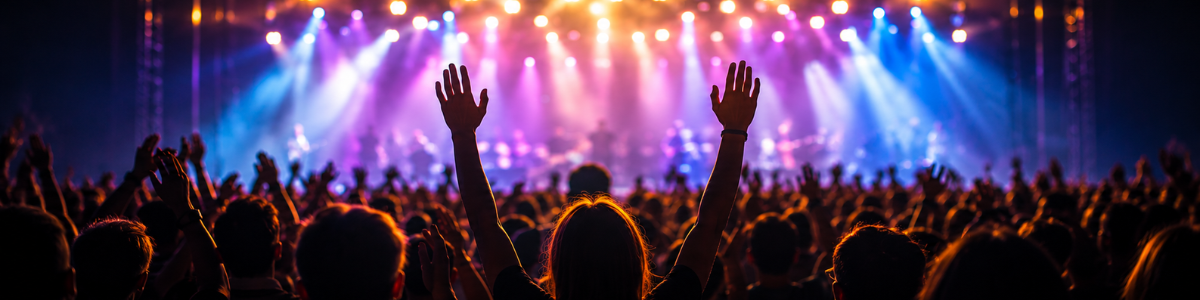
The lights go down. The crowd roars. Twenty thousand strangers hold their breath at the exact same moment. You feel it in your chest before you can name it. This is why live events are good for you — and science can prove it.
You already know that going to a concert or a game feels good. But understanding why live events are good for you goes far deeper — and is far more medically significant — than most people realize. A growing body of research from universities including Goldsmiths (University of London), the University of Georgia, Brigham Young University, Anglia Ruskin University, and Johns Hopkins shows that attending live events produces measurable benefits for your mental health, physical health, social connection, and longevity. Not just “it felt nice.” Actual, quantifiable improvements in wellbeing that rival prescription interventions.
The timing matters. The Surgeon General has declared loneliness a national public health crisis. Screen time has replaced in-person experience at a scale we’ve never seen before. The case for getting out and going live has never been stronger or better supported by research. Here’s what the science says.
Ready to put the science into action? Browse upcoming events near you at boxofficeticketsales.com.
Live Music Could Add Years to Your Life
Here’s the headline finding that should make you reach for your calendar.
In a widely cited study by behavioral science expert Patrick Fagan of Goldsmiths, University of London, conducted in partnership with O2, researchers used psychometric and heart rate tests to measure how people felt during different activities. The results were striking: attending a live music event every two weeks is associated with a potential increase in life expectancy of up to nine years.
The numbers tell the story:
- Just 20 minutes at a live music event boosted feelings of well-being by 21%
- That 21% boost outperformed yoga (+10%) and dog-walking (+7%), activities widely promoted as wellbeing interventions
- The boost included a 25% rise in feelings of self-worth and connection with others
- A 75% increase in mental stimulation was also recorded
Why does this happen? The combination of music, crowd energy, shared emotion, physical presence, and social bonding creates a neurochemical cascade that consistently outperforms solitary or passive entertainment. The study found that fortnightly attendance, rather than occasional attendance, was the key driver of the association with longevity.
So going to a concert twice a month isn’t just a fun night out. It may be one of the most health-positive recreational choices available to adults who don’t want to add another item to their wellness to-do list, because it doesn’t feel like a wellness activity. It feels like a great night.
Your Brain on Live Music: The Neurochemistry of the Concert
Step into that crowd, and your body starts a chemical reaction you can’t feel. Here’s the science of what’s actually going on.
Dopamine, the pleasure chemical. Music activates the brain’s reward system by triggering dopamine release, the same neurochemical involved in pleasurable experiences like eating and exercise. At a live event, this response gets amplified by the social context, the anticipation of favorite songs, and the physical energy of the crowd. Research consistently shows a higher dopamine response at live performances than when you listen to the same music alone at home.
Oxytocin, the bonding hormone. Live events reliably trigger the release of oxytocin, often called the “love hormone,” which promotes social bonding, trust, and human connection. Research from the Royal College of Music and a 2026 field study published in bioRxiv found that live sports spectating engaged measurable oxytocin dynamics among audience members, with even casual fans showing significant increases during games. Here’s the remarkable part: people who started with lower oxytocin levels saw the greatest increases, meaning live events may be especially powerful for those who feel most disconnected.
Cortisol, the stress hormone, is going down. Research from the Royal College of Music used 700 saliva samples collected from London concertgoers before, during, and after a classical music performance. The finding: live performance reduces cortisol, the body’s primary stress hormone. The researchers chose classical music specifically to minimize confounding factors such as dancing and heat, thereby isolating the musical experience itself as the driver. Streaming the same music at home does not produce this effect.
Heart rate synchrony, the crowd becomes one. This is one of the most remarkable recent findings in live event science. A 2026 study from the University of Georgia and Brigham Young University found that attending live events causes audience members’ heartbeats to synchronize. Researchers documented this physiological synchrony at concerts, sporting events, and religious rituals, and regard it as a measurable biological substrate of shared group experience. When a crowd holds its breath during a tense moment, the audience’s hearts literally beat together.
Live Events Fight Loneliness, and Loneliness Is a Crisis
The context for this science has never been more urgent. The loneliness epidemic has reached a level public health authorities now describe as a full-blown crisis.
- The World Health Organization’s June 2025 Commission on Social Connection found that 1 in 6 people worldwide experiences persistent loneliness, linked to an estimated 871,000 deaths annually
- The US Surgeon General declared loneliness a national public health crisis, noting that lacking adequate social connection carries health risks equivalent to smoking 15 cigarettes a day
- Social isolation is associated with roughly a 50% increased risk of dementia, a 29% increased risk of heart disease, and a 32% increased risk of stroke
- A November 2025 APA poll found more than 6 in 10 US adults say societal division is a significant source of stress, with many reporting feeling genuinely disconnected
- Money spent on experiences correlates with significantly less loneliness than money spent on material goods
So what does the science say live events do about it? A landmark 2026 study from the University of Georgia and Brigham Young University, published in Social Psychological and Personality Science and analyzing data from 1,551 participants, found that attending live events is one of the most reliable predictors of feelings of social connection. The researchers, led by Dr. Richard Slatcher (UGA) and Dr. Julianne Holt-Lunstad (BYU), identified the specific event characteristics that foster connection most powerfully:
- In-person events (vs. virtual) showed dramatically stronger connection effects
- Events involving active participation (vs. passive watching) produced a stronger connection
- Attending with others (vs. alone) amplified the effect
- Recurring attendance was the single strongest independent predictor of sustained connection
A separate 2023 study published in Frontiers in Public Health, analyzing data from 7,249 adults, found that attending live sporting events was associated with improved life satisfaction, a stronger sense of life is worth, and reduced loneliness, above and beyond demographic predictors such as age, income, and employment status. The effect size was comparable to the well-being impact of having a job.
Here’s the key insight. Virtual concerts, streamed sports, and digital events do not produce the same benefits. Research from the University of South Australia, which compared virtual and in-person events, found that virtual events showed no measurable impact on positive emotions, relationships, or meaning, while in-person events improved all of these. The physical presence is the medicine.
Why That Ticket Is Worth More Than You Think
Decades of research in positive psychology have consistently shown that spending money on experiences rather than material possessions produces greater and longer-lasting happiness. The science here is more compelling than the simple “experiences over things” headline suggests.
Here’s why experiences outperform possessions:
- Experiences improve with memory. Unlike a material purchase that depreciates, the memory of an experience improves over time. It gets edited, refined, and re-lived more positively. The concert you attended five years ago likely feels even better in retrospect than it did in the moment.
- Experiences are harder to compare. When you buy a new TV, you compare it to better TVs. When you attend a concert, the experience is unique and personal. It becomes part of your identity and your story rather than a product on a spec sheet.
- Experiences connect us to others. Shared experiences build social bonds in a way shared possessions don’t. “We were at that show” is a memory that deepens relationships.
- Anticipation is part of the experience. Research shows that looking forward to an experience, buying tickets in advance, and planning the night is itself a source of happiness, often exceeding the anticipation of buying an object.
There’s a loneliness connection here, too. A 2026 study on loneliness found that spending on experiences such as travel, concerts, and classes correlates with significantly less loneliness than spending on material goods. The mechanism is the social connection produced by experience-based spending, and live events are one of the most direct and accessible forms of it.
The Awe Effect: Live Events Change How You See the World
Psychologists define “awe” as the feeling of being in the presence of something vast that challenges your normal understanding of the world. It’s one of the most powerful emotional experiences available to human beings, and live events are among the most reliable triggers of it.
Research from UC Berkeley and other institutions has found that experiencing awe produces measurable psychological benefits:
- Decreased self-focus and self-criticism, the mental chatter that drives anxiety and depression, quiets down
- Increased sense of meaning and purpose
- Greater prosocial behavior; people who experience awe are more generous, more collaborative, and more empathetic
- Reduced inflammatory cytokines, markers of physical stress in the body, in the days following an awe experience
Think about the moments that create this. A performer filling a 20,000-seat arena. The lights go down before a show begins. A perfect musical moment shared with thousands of strangers. The crescendo of a live sports crowd. A Cirque du Soleil performer 40 feet in the air. These aren’t just entertainment. They’re awe experiences that reset the nervous system and recalibrate perspective.
Researchers studying “peak experiences,” the subset of human moments people describe as transformative and life-altering, have found that live music concerts rank among the most commonly cited triggers, alongside childbirth, religious experiences, and moments in nature. These experiences are not trivial. They’re the material of meaning.
Are Concerts Good for Your Mental Health?
Yes, and the research is robust. A 2026 peer-reviewed study published in Health Promotion Practice (Johns Hopkins University School of Medicine) found that attending live music concerts reduces mental health stigma, increases empathy, and improves access to mental health resources among attendees. Live music creates a community-based, culturally relevant context that reaches people who might not otherwise engage with mental health programming.
The University of South Australia’s research, which measured wellbeing using the established PERMA framework (Positive Emotions, Engagement, Relationships, Meaning, and Accomplishment), found that frequent event attendance led to measurable improvements across all five dimensions of wellbeing, with the strongest effects on positive emotions and engagement.
The specific mental health benefits documented in research include:
- Reduced anxiety. The cortisol-lowering effect of live music produces a genuine physiological de-escalation of the stress response, as documented in controlled studies that measure hormone levels in saliva samples.
- Improved mood. Dopamine release during live music provides an immediate mood elevation that, with regular attendance, becomes cumulative.
- Reduced depression risk. Social connection is one of the strongest protective factors against depression, and the loneliness that life events address is itself a major depression risk factor.
- Greater sense of meaning. The PERMA research found that live event attendance specifically improves the “meaning” dimension of wellbeing, the sense that life has purpose and direction.
- Reduced mental health stigma. The Johns Hopkins study found that the communal, non-clinical environment of a live music event fosters more open attitudes toward mental health that persist beyond the event itself.
Live Sports Have Their Own Science, and It’s Just as Compelling
Sports fans, the research has great news for you, too. And in some ways it’s more surprising, because the benefits extend to people who attend alone and don’t know a soul in the crowd.
Consider the key findings:
- A 2023 study in Frontiers in Public Health (Anglia Ruskin University) analyzing 7,249 adults found that attending live sporting events predicts improved life satisfaction, a greater sense that life is worthwhile, and reduced loneliness, with effect sizes comparable to the wellbeing impact of employment
- A 2026 bioRxiv field study (University of Georgia and Brigham Young University) measured oxytocin and cortisol in 60 casual sports fans during live basketball games. Fans who started with low oxytocin showed clear increases during the game, cortisol decreased, and heart rates synchronized across unrelated strangers in the crowd
- Longitudinal studies in Japan found that sports watching is associated with fewer depressive symptoms and richer social connections over time
- The oxytocin-to-unity pathway measured in the sports studies, where oxytocin promotes a felt sense of unity toward both players and fellow spectators, shows that the social bonding of live sports is neurobiologically real, not just perceived
Then there’s the team loyalty effect. Research found that stronger team loyalty is associated with greater life satisfaction, perceived emotional support from other fans, and reduced loneliness, particularly among middle-aged and older adults. Being a fan isn’t just tribal psychology. It’s a form of social belonging that delivers measurable health benefits.
When Live Events Become a Lifestyle: The Rise of Gig-Tripping
“Gig-tripping,” the practice of planning travel specifically around live music events, has become one of the fastest-growing travel trends of the 2020s. A KAYAK report found that 44% of Gen Z plan to travel for a music event in 2026. But the science behind why this feels so meaningful goes deeper than a trend.
Research on anticipated experiences shows that planning a trip around a concert yields well-being benefits that begin the moment you buy tickets, weeks or months before the event itself. Stack travel anticipation, social planning with friends, the event, and the shared memory afterward, and you get a well-being arc that can span months.
What gig-trippers know intuitively, science confirms:
- Events become anchors of autobiographical memory; experiences tied to specific locations and social contexts are more vivid, more emotionally rich, and more identity-defining than routine ones
- The combination of novelty (a new city) and familiarity (a beloved artist) is a psychologically potent mix that maximizes engagement and positive emotion
- Post-event sharing, talking about the show with friends, and posting memories extends the well-being effect well beyond the night itself
The Permission You Needed
The research adds up to something simple. Going to more live events, concerts, sports games, theater, festivals, is one of the most enjoyable things you can do that’s also genuinely, measurably good for you. Not in a “kale is healthy” way. In a “your heart rate syncs with thousands of strangers, your brain floods with the bonding hormone, your stress hormones drop, and you feel more connected to the human race” way.
So here’s what the science recommends:
- Go regularly. Fortnightly attendance yielded the strongest associations with longevity.
- Go with people. In-person attendance with others produces stronger social connection effects.
- Go to different things. Concerts, sports, theater, and festivals all deliver benefits; variety compounds the effect.
- Go in person. Streaming and virtual attendance don’t replicate the benefits.
- Go for the experience, not just the artist. The crowd, the atmosphere, and the shared moment are the medicine.
The one thing standing between most people and more live events? Not knowing what’s available, not having tickets secured in advance, or assuming it’s too complicated or expensive to go regularly. boxofficeticketsales.com solves all of that, with every event, every city, and every price range in one place.
Go Live, Go Often
The evidence is in, and it’s more compelling than most people expect. Going to live events isn’t a guilty pleasure. It’s a scientifically documented investment in your mental health, your social wellbeing, your stress levels, your sense of meaning, and potentially your lifespan. Loneliness has been declared a public health crisis, and screen time has replaced face-to-face experience at unprecedented levels. The prescription is simple: get out, go live, go often.
The next great memory, the next meaningful connection, the next moment when 20,000 people feel their hearts beat together, it’s waiting for you. Find your next live event and buy tickets at boxofficeticketsales.com.